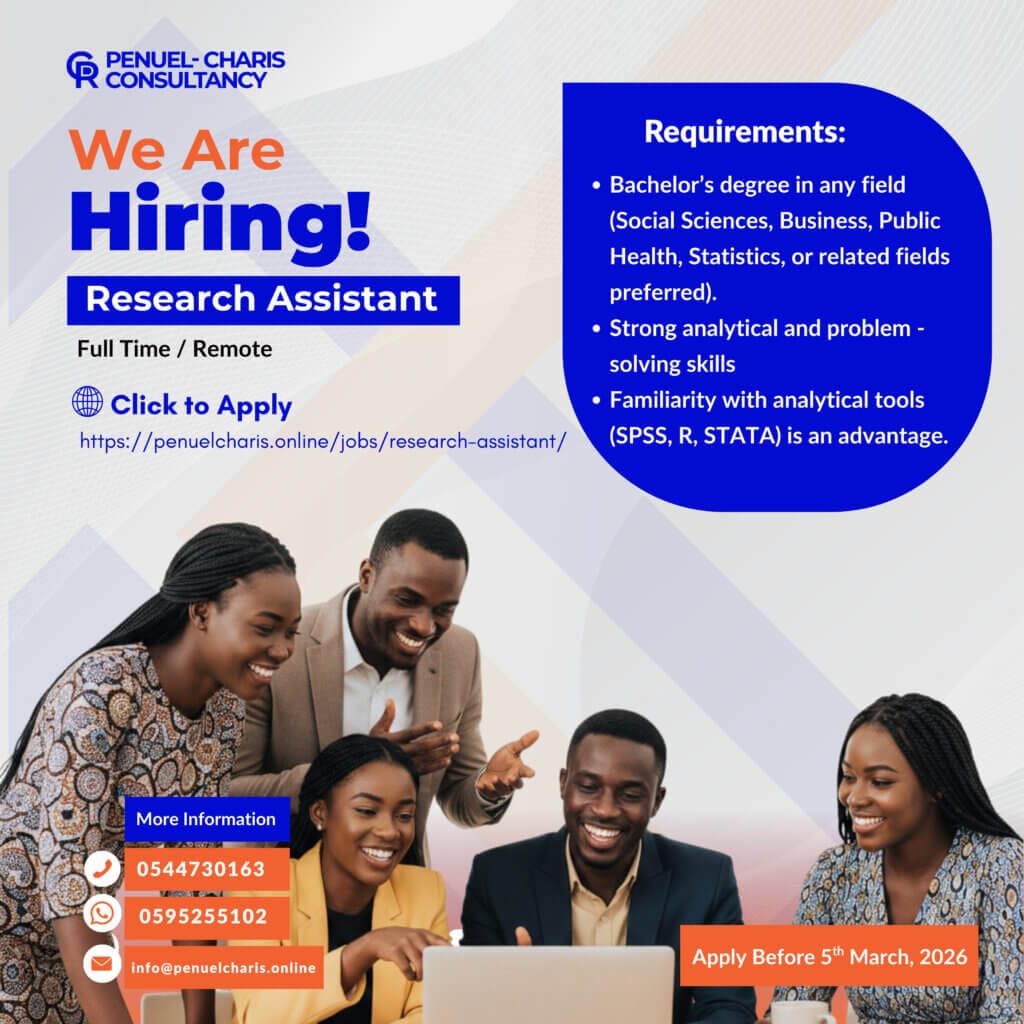

Research consultancies are becoming an integral part of Ghana’s development landscape, providing valuable insights and data-driven solutions across various sectors. The rise of these specialized services reflects a broader trend towards evidence-based decision-making and strategic planning. This article explores the significant role of research consultancies in Ghana and the trends driving their growth.
1. Enhanced Data-Driven Decision Making
In today’s information age, data is king. Research consultancies in Ghana are harnessing the power of data to inform decision-making processes in both the public and private sectors. They offer expertise in collecting, analyzing, and interpreting data to provide actionable insights. This shift towards data-driven decision-making ensures that policies and strategies are based on robust evidence, leading to more effective outcomes.
2. Diverse Sector Engagement
Research consultancies are engaged across various sectors, including healthcare, education, agriculture, finance, and social development. Their work spans from market research for businesses to policy research for government agencies. By addressing sector-specific challenges with tailored research, these consultancies help organizations and institutions achieve their goals more efficiently.
3. Technological Integration
The integration of advanced technologies in research methodologies is another key trend. Research consultancies are utilizing digital tools and platforms for data collection and analysis. Technologies such as Geographic Information Systems (GIS), mobile surveys, and big data analytics enhance the accuracy and efficiency of research activities. This technological integration also facilitates real-time data collection and analysis, enabling quicker and more informed decision-making.
4. Focus on Local Context
Understanding the local context is crucial for the success of any research initiative. Research consultancies in Ghana are prioritizing local context by employing researchers who are familiar with the cultural, social, and economic landscapes of the regions they study. This localized approach ensures that research findings are relevant and applicable, leading to more effective interventions and policies.
5. Capacity Building and Training
Capacity building is an essential component of the services offered by research consultancies. They provide training and development programs to enhance the research skills of local professionals. This focus on capacity building not only improves the quality of research but also fosters a culture of continuous learning and development within the research community.
6. Partnerships and Collaborations
Collaborative efforts between research consultancies, academic institutions, government agencies, and international organizations are on the rise. These partnerships leverage the strengths of each entity, combining academic rigor with practical expertise. Such collaborations enhance the quality and impact of research projects, leading to more comprehensive and multidisciplinary approaches to problem-solving.
7. Sustainability and Development Goals
Research consultancies are increasingly aligning their work with global sustainability and development goals. By focusing on areas such as environmental sustainability, public health, and social equity, these consultancies contribute to the broader agenda of sustainable development. Their research supports initiatives that aim to achieve the United Nations Sustainable Development Goals (SDGs) in Ghana.
8. Impact Evaluation and Monitoring
The demand for impact evaluation and monitoring is growing, with organizations seeking to measure the effectiveness of their programs and interventions. Research consultancies provide specialized services in this area, helping organizations assess the outcomes and impacts of their initiatives. This enables continuous improvement and accountability, ensuring that resources are utilized effectively.
9. Policy Influence and Advocacy
Research consultancies play a pivotal role in shaping public policy. Through rigorous research and evidence-based recommendations, they influence policy decisions at local, regional, and national levels. By providing policymakers with credible and reliable data, these consultancies contribute to the development of informed and effective policies.
Conclusion
The rise of research consultancies in Ghana signifies a growing appreciation for the value of evidence-based decision-making. These consultancies are driving advancements across various sectors by providing critical insights and data-driven solutions. As they continue to evolve, their impact on Ghana’s development landscape will undoubtedly increase, fostering innovation, efficiency, and sustainable growth.